China Top Paper Cup Plate Machine Manufacturers?

Time:2026-09-12 Author:Madeline
0%

Choosing among China’s top Paper Cup Plate Machine manufacturers requires more than comparing catalog prices. A reliable supplier should show practical manufacturing experience, stable engineering processes, and clear quality records. Buyers need machines that form accurate edges, maintain steady output, and reduce material waste during long production shifts. Details matter. Ask how the manufacturer tests forming pressure, heating temperature, electrical controls, and finished plate dimensions. Factory videos can help, but direct verification is stronger.

This guide introduces the main factors behind a dependable manufacturer shortlist in China. It considers machine structure, production speed, automation options, spare-parts availability, operator training, and after-sales support. Experienced suppliers should explain their recommendations without hiding technical limitations. They should also provide sample testing with the buyer’s paper material, because paper stiffness and coating can change machine performance. Not every factory fits every project. A small converter may need a compact model, while a large packaging plant may require continuous feeding and integrated inspection.

Certifications and documented inspections add confidence, but they are not the entire story. A certificate does not replace a careful factory assessment. Buyers should review machine drawings, warranty terms, delivery schedules, installation methods, and service response times. Some manufacturers communicate well before payment, then respond slowly after installation. That risk deserves attention. This introduction also recognizes an important limitation: rankings can become outdated as equipment, export teams, and production capacity change. A thoughtful comparison should therefore combine published evidence, customer feedback, technical demonstrations, and direct discussions with engineers.
China Top Paper Cup Plate Machine Manufacturers?

What Are Paper Cup and Plate Machines?

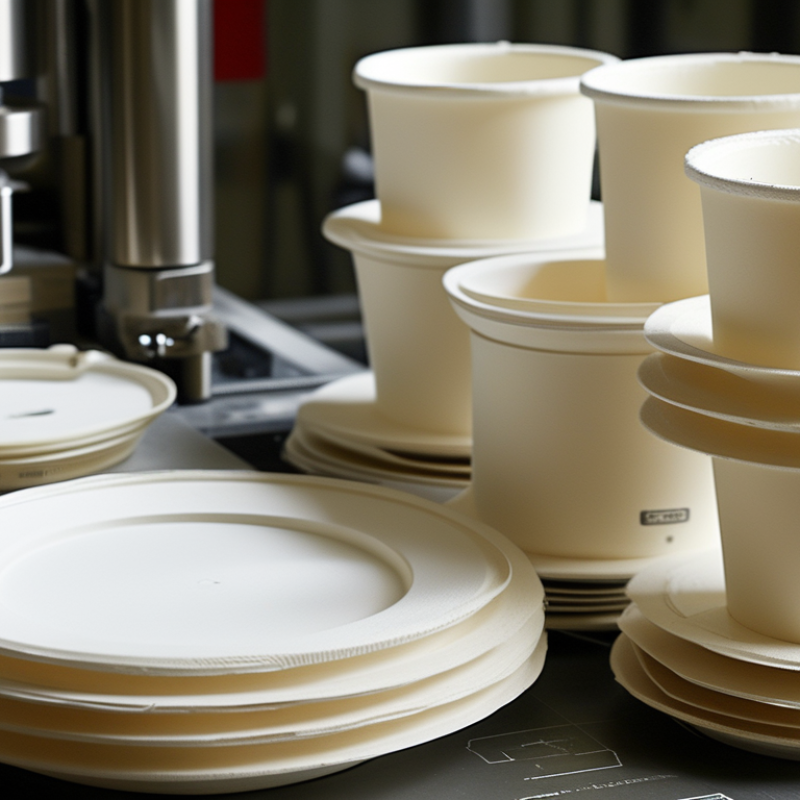
Paper cup and plate machines are automated systems that turn coated paperboard into food-service containers. They feed, shape, seal, press, cut, and stack material with controlled timing. Cup machines usually form a curved sidewall, attach a bottom disc, and create a firm rim. Plate machines press heated paperboard inside a shaped mould, producing a defined edge and stable base.

The process begins with paperboard that matches the required thickness, coating, and moisture resistance. Rollers guide the material into position. Heating softens selected coatings without scorching the paper. Forming tools then create the cup or plate shape. Sensors monitor temperature, pressure, speed, and alignment during production. A small deviation can cause leaks, wrinkles, weak rims, or uneven stacking.

In practical manufacturing, machine selection depends on output, product size, and available floor space. Experienced operators also inspect samples during each shift, not only at startup. The first trial is rarely perfect. Sometimes a minor pressure change improves the rim but damages the shape. That trade-off needs careful testing. Reliable equipment should allow quick mould changes, accessible cleaning points, and clear adjustment controls. Manufacturers in China commonly provide different configurations for standard cups, divided plates, and custom sizes. However, buyers should verify trial results, electrical standards, maintenance support, and actual production speed before making a decision. “Fast” on a specification sheet may not mean stable production.

How China’s Manufacturers Differ in Machine Types

China’s paper cup and plate machine manufacturers differ mainly by machine type, not just production speed. Grand View Research valued the global paper cups market at about USD 12.5 billion in 2023. It also forecasts approximately 3.6% annual growth from 2024 to 2030. This demand supports wider equipment choices.

Cup machines usually include intermittent, high-speed, and servo-controlled models. Intermittent machines suit smaller orders and frequent size changes. High-speed lines target standardized cups with stable paper feeding. Servo systems improve forming accuracy and reduce adjustment time. Plate machines follow another path. Hydraulic presses offer simple forming and lower entry costs. Pneumatic or servo presses provide faster cycles and more consistent pressure. Some Chinese factories also supply integrated die-cutting, heating, and stacking systems. The best type depends on coating, paper thickness, plate diameter, and hourly output. A catalogue number is not proof. A machine can look efficient on paper and disappoint on a humid factory floor.

Tips: Request a live trial using your actual coated paper. Check forming defects, rim strength, noise, and energy use. Ask for measured output, not theoretical speed. Review replacement-part availability and operator training. ISO 9001 certification can support process reliability, but it cannot replace factory inspection. This point is easy to overlook.

Chinese paper product machinery is commonly differentiated by forming method, automation level, and production speed. The chart uses representative midpoint values from typical published operating ranges: semi-automatic equipment generally runs at lower speeds, while multi-station and high-speed automatic machines provide higher output for mass production. Actual performance depends on paper material, product size, tooling, and operating conditions.

Key Criteria for Ranking Top Chinese Manufacturers

China Top Paper Cup Plate Machine Manufacturers?

Ranking Chinese paper cup and plate machine manufacturers requires more than comparing advertised speed. FAO’s Forestry Production and Trade Yearbook reports global paper and paperboard production at about 417 million tonnes in 2022. This scale increases demand for stable converting equipment. A credible ranking should examine verified production records, forming accuracy, energy use, and machine uptime. Factory visits matter. So do customer references from similar climates and product sizes.

Technical evidence should lead the assessment. Check whether a machine maintains consistent rim curling, sealing, plate pressing, and stacking during extended trials. Request defect-rate records, preferably from independent audits or signed production reports. Energy consumption per 1,000 pieces is also useful. Smithers’ global paper packaging studies identify sustainability and material efficiency as major market pressures. Therefore, efficient heaters, servo drives, and low-waste tooling deserve higher scores. Certification documents alone are not enough.

Tips: Ask for a live test using your paper, coating, and target dimensions. Compare hourly output after quality losses, not the brochure’s maximum speed. Review spare-part availability, remote diagnostics, training, and response times in writing. A low purchase price may hide expensive molds or frequent downtime. No ranking is perfect. My practical concern is that many published comparisons rely on factory claims, not long-term data. Treat unverified figures as provisional, and score transparency as carefully as performance.

Production Quality, Certifications, and Technical Support

Choosing China’s top paper cup and plate machine manufacturers requires more than comparing prices. Production quality appears in small details: stable forming pressure, accurate temperature control, clean cutting edges, and consistent sealing. During factory visits, inspect sample stacks from several production runs. A smooth first batch proves little. Ask for output records, rejection rates, and maintenance history. Reliable manufacturers should explain these figures clearly, not hide behind impressive brochures. Even strong equipment can produce defects when operators overlook material thickness or humidity.

Certifications add practical confidence, but they need verification. Check ISO 9001 for quality management and request relevant CE or market-specific compliance documents. Materials touching food should include current test reports and traceable supplier records. Technical support matters just as much after delivery. Ask whether engineers provide installation guidance, operator training, remote diagnostics, and spare-parts planning. A clear response-time policy is valuable during an unexpected sealing fault. No machine is maintenance-free. This is easy to forget when sales demonstrations look perfect. Request a written service scope, including software updates and troubleshooting limits.

Tips: Test the machine with your intended paper stock before purchase. Measure speed, noise, waste, and product dimensions. Keep a short trial report with photographs. Speak with an engineer, not only a salesperson. Also, ask how quickly common heaters, sensors, and molds can be supplied. A low purchase price may become expensive when one small component stops production. Service quality deserves the same attention as output speed.

How to Choose the Right Chinese Manufacturer for Your Needs

China Top Paper Cup Plate Machine Manufacturers?

Choosing the right Chinese manufacturer requires more than comparing prices. Define your product size, paper material, forming speed, and required automation before contacting suppliers. A reliable manufacturer should explain machine limits clearly, not promise unrealistic output. Ask for production videos, technical drawings, electrical details, and recent customer references. Real factory evidence matters. During a video inspection, check assembly quality, wiring protection, spare-part storage, and operator access. Small details often affect daily downtime.

Tips: Request a sample trial using your paper. Confirm cup or plate dimensions, production speed, rejected-piece rates, and power requirements in writing. Ask how quickly engineers respond when faults occur. Clarify installation, training, warranty coverage, and spare-part availability before paying. A low quotation can become expensive when support is slow. It happens more often than buyers expect.

Review the manufacturer’s experience with similar machines, not only its years in business. A supplier may produce excellent equipment but lack experience with your paper weight or factory conditions. Check whether key components have stable replacements and whether software settings are easy to adjust. Speak with existing users if possible. Their comments may reveal noise, maintenance frequency, or hidden consumable costs. Do not ignore uncomfortable findings; a rushed decision can leave a machine idle. A careful technical comparison is less exciting, but usually more reliable.

China Top Paper Cup Plate Machine Manufacturers? - How to Choose the Right Chinese Manufacturer for Your Needs

Evaluation Dimension Recommended Benchmark Why It Matters Documents or Evidence to Request Buyer Assessment
Machine Type Confirm whether the equipment is designed for paper cups, paper plates, or both through interchangeable tooling. Cup forming and plate forming use different structures, molds, and production processes. Machine model description, process flow, tooling list, and sample-product specifications. □ Suitable   □ Needs modification
Product Size Range Select the required cup volume or plate diameter first; common cup applications range from approximately 4–22 oz, while plate tooling is often specified by diameter. A machine cannot automatically cover every size without compatible molds and forming parts. Dimensional drawings, approved product samples, and tooling compatibility table. □ Meets range   □ Partial range
Rated Production Speed Compare the guaranteed output for the exact product and material, not only the machine’s maximum speed; typical equipment may be specified from dozens to several hundred pieces per minute depending on design. Actual output is affected by product size, paper structure, operator skill, and downtime. Factory acceptance test standard, guaranteed output, rejected-piece allowance, and speed test video. □ Verified   □ Unverified
Paper Material Compatibility Verify the supported paperboard grammage, coating type, roll or sheet format, and moisture requirements. Many food-service applications use coated paperboard, but the exact range must be confirmed for each machine. Incorrect paper specifications can cause sealing defects, wrinkles, cracking, or feeding problems. Material specification sheet, paper samples, coating compatibility statement, and test report. □ Compatible   □ Test required
Forming and Sealing Quality Require stable side-wall forming, bottom sealing for cups, and uniform rim or edge forming for plates, with samples tested under normal production conditions. Consistent forming directly influences leakage resistance, appearance, and packaging performance. Sealing test results, visual inspection criteria, leak-test method, and production samples. □ Pass   □ Improvement needed
Automation Level Compare automatic feeding, forming, counting, stacking, alarm functions, and waste collection according to the planned labor model. Higher automation can reduce manual handling, but may increase purchase cost and maintenance requirements. Automation description, control-system specification, operating video, and spare-parts list. □ Appropriate   □ Over/under specified
Electrical Requirements Confirm voltage, frequency, phase, installed power, compressed-air requirements, and plug or wiring configuration before ordering. Common industrial supplies include 380–415 V, 50 Hz, three-phase, but local requirements vary. Electrical incompatibility can delay installation and may require a transformer or other site modifications. Electrical schematic, nameplate data, utility-consumption sheet, and installation manual. □ Site compatible   □ Adaptation required
Safety and Compliance Request risk assessment, emergency-stop protection, guards, electrical documentation, and conformity documents applicable to the destination market. Compliance obligations depend on the importing country and may involve machinery, electrical, and workplace-safety rules. Declaration of conformity where applicable, test reports, manuals, safety-circuit drawings, and inspection records. □ Documents complete   □ Review needed
Quality Management Prefer a documented quality-control process covering incoming materials, machining, assembly, wiring, testing, and final inspection. ISO 9001 certification can support evaluation but does not replace machine testing. Process control helps reduce inconsistent assembly and repeat defects. Valid certificate, inspection checklist, calibration records, traceability procedure, and final test report. □ Strong system   □ Limited evidence
Factory Acceptance Testing Conduct a documented test using the buyer’s approved paper, tooling, product dimensions, and target speed before shipment. Testing with actual materials provides stronger evidence than a general demonstration. Signed FAT protocol, production video, sample count, defect rate, and punch-list closure record. □ Completed   □ Pending
Tooling and Changeover Compare included molds, change parts, adjustment method, estimated changeover time, and the cost of additional sizes. Tooling often determines the real flexibility and total cost of a cup or plate machine. Tooling drawings, spare-parts quotation, changeover instructions, and compatibility confirmation. □ Flexible   □ Size-specific
After-Sales Support Require installation guidance, operator training, remote troubleshooting, response-time commitments, and access to replacement parts. Downtime can be costly when technical support or parts are difficult to obtain. Service agreement, training plan, support channels, spare-parts lead times, and warranty terms. □ Defined   □ Unclear
Warranty Coverage Check the warranty period, covered components, exclusions, labor coverage, shipping responsibility, and procedure for handling defects. A low purchase price may create higher risk if warranty responsibilities are not clearly defined. Signed warranty clause, excluded-parts list, service process, and escalation contact. □ Acceptable   □ Negotiate
Delivery and Installation Evaluate manufacturing lead time, packaging method, shipping terms, installation responsibility, and commissioning requirements. The quoted machine price may not include freight, customs, installation, utilities, or site preparation. Commercial quotation, packing list, installation scope, delivery schedule, and commissioning checklist. □ Clear scope   □ Hidden costs possible
Total Cost of Ownership Compare purchase price together with tooling, energy, compressed air, labor, maintenance, consumables, spare parts, freight, duties, and expected downtime. The lowest initial quotation is not always the lowest long-term operating cost. Five-year cost estimate, utility consumption, maintenance schedule, spare-parts pricing, and production assumptions. □ Competitive   □ Recalculate
Selection Note: Use the same product dimensions, paper specifications, tooling, test duration, and acceptance criteria when comparing Chinese manufacturers. Performance figures should be treated as verified only after a documented factory acceptance test.

FAQS

How do cup and plate machines differ?

Cup machines often use intermittent, high-speed, or servo-controlled forming systems. Plate machines commonly use hydraulic, pneumatic, or servo presses. The right choice depends on product size, paper thickness, coating, and output needs.

Which cup machine suits frequent size changes?

Intermittent machines usually handle smaller orders and frequent size changes well. They may offer lower output. That trade-off matters.

What are the advantages of servo-controlled machines?

Servo systems can improve forming accuracy and shorten adjustment time. They may also support steadier production. However, higher precision does not guarantee perfect results.

How should I compare machine output?

Ask for measured output using your own paper and coating. Compare accepted pieces per hour, not maximum brochure speed. A damp factory floor may reduce performance.

What should a live machine trial examine?

Check rim curling, sealing, plate pressing, stacking, noise, and energy consumption. Record rejected pieces during extended operation. Short demonstrations can hide problems.

Why does factory inspection matter?

Factory visits can reveal wiring protection, assembly quality, spare-part storage, and operator access. Certification supports process control. It cannot replace inspection.

What information should I request before purchasing?

Request technical drawings, power requirements, production videos, sample results, and recent customer references. Confirm installation, training, warranty coverage, and response times in writing. Written details prevent some disputes.

Can a low quotation become expensive?

Yes. Hidden costs may include special molds, replacement parts, energy use, training, and downtime. A cheap machine is not always economical. I might still underestimate maintenance.

How can I evaluate long-term reliability?

Review uptime records, defect rates, energy use per 1,000 pieces, and maintenance frequency. Speak with users operating similar machines. Their comments may reveal unpleasant details.

What factory conditions should influence the choice?

Consider humidity, paper weight, coating type, product dimensions, and available operator skills. A machine proven elsewhere may struggle in your conditions. Test before deciding.

Conclusion

Choosing among China’s top Paper Cup Plate Machine manufacturers requires more than comparing prices. These machines are designed to form, shape, and finish disposable paper cups and plates, with different models suited to various materials, product sizes, automation levels, and production capacities. Chinese manufacturers may offer single-purpose equipment, multi-function systems, or customized production lines, so buyers should first understand their required output, raw materials, product specifications, and factory conditions.

A reliable evaluation should consider machine performance, manufacturing quality, production consistency, safety features, certifications, delivery schedules, installation support, spare-parts availability, and after-sales service. Technical guidance and operator training can also have a major effect on long-term productivity. The right manufacturer is not necessarily the one offering the lowest quotation, but the one that provides a stable Paper Cup Plate Machine matching the buyer’s application, budget, maintenance capabilities, and future expansion plans. Careful communication, sample testing, and a clear agreement on specifications can help ensure a practical and dependable purchasing decision.


Madeline

Madeline

Madeline is a dedicated marketing professional with a wealth of expertise in our company's core offerings. With a keen understanding of the industry, she brings a unique perspective to her role, consistently delivering high-quality content that highlights the superior aspects of our products. As......